Contents (10 sections)
Creating the perfect lighting for your home office can significantly affect your productivity and overall comfort. In this guide, we will explore essential steps to ensure you devise a lighting plan that caters to your personal needs and improves your workspace environment. From selecting the right light sources to manipulating natural light, each step is designed to enhance your work experience.
Step 1: Understand the Importance of Lighting
Lighting is a critical factor in any workspace, especially in a home office where you might be spending long hours. Poor lighting can lead to eye strain, headaches, and decreased focus. According to research from the American Society of Interior Designers, well-lit workspaces improve employee satisfaction and productivity by up to 30%. Therefore, understanding the different types of lighting and their psychological effects can help you create an inviting and efficient environment.
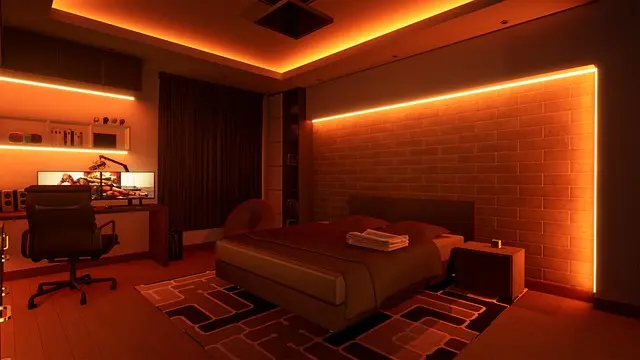
There are three primary types of lighting you should consider: ambient, task, and accent lighting. Ambient lighting serves as the general light in the room, while task lighting focuses on specific areas where detailed work is done, such as reading or writing. Accent lighting adds warmth and character, enhancing the overall aesthetic of the office. By combining these types, you can create a dynamic and functional workspace.
Step 2: Assess Your Workspace Layout
To optimise your home office lighting effectively, start by assessing the layout of your workspace. Think about where you spend most of your time. Is it near a window, or is it more secluded? Natural light should be utilised as much as possible, as it not only enhances mood but also helps regulate the body's circadian rhythms. Ideal placements for your desk should be next to a window when possible, allowing for ample daylight. However, beware of glare on screens.
Next, consider how light will travel through the room. If your office has darker corners, it may require additional light sources to improve visibility throughout the area. Understanding the shape and function of the space can make a significant difference in your lighting choices, helping to minimise shadows and dark spots that can hinder productivity.
Step 3: Choose the Right Fixtures and Bulbs
Selecting the appropriate fixtures and bulbs is paramount to achieving the desired lighting effect. LED bulbs are popular for home offices due to their energy efficiency and longevity. They emit a bright, clear light that closely mimics natural sunlight, making them ideal for task lighting.
Consider smart lighting solutions, which allow flexibility in brightness and colour temperature—warm light is often more relaxing, while cool light can boost alertness. Here’s a quick table to compare types of bulbs:
| Bulb Type | Brightness (Lumens) | Lifespan (Hours) | Energy Efficiency |
|---|---|---|---|
| LED | 800 | 25,000 | Very High |
| CFL | 800 | 10,000 | High |
| Incandescent | 800 | 1,000 | Low |
| Halogen | 800 | 2,000 | Moderate |
Step 4: Focus on Dimming and Control
Integrating dimmer switches or smart controls into your lighting system can provide significant benefits. A study published by UCL Energy Institute indicated that adjustable lighting facilitates a better working environment, allowing individuals to tailor brightness levels to their tasks and moods as the day progresses. Dimmer switches offer flexibility and can prolong the life of your bulbs. Smart systems might enable you to control lighting with your phone or voice—ideal for an efficient working experience.
To avoid working under harsh, direct light, make sure to balance task and ambient lighting creatively. Use layers and adjustable options so lighting can change dramatically according to the time of day and your activities.
Step 5: Incorporate Natural Elements
Natural light is a vital aspect of the work environment. Additional to its health benefits, studies show that exposure to sunlight positively influences mood and productivity. To promote natural lighting in your office, consider installing sheer curtains that allow light flow while blocking direct glare. Otherwise, strategically positioned mirrors can be employed to reflect light and create a sense of depth without overpowering light sources.
Moreover, augmenting natural elements such as plants can enhance the ambiance while improving air quality, creating a positive work environment. Aim for greenery positioned close to your workspace to enjoy both their aesthetic and health benefits.
Step 6: Test and Adjust
Once your lighting is in place, it’s essential to monitor the effectiveness of your choices. Make periodic adjustments based on your work habits and comfort levels. Keep an eye on the performance of the different light types throughout the day; you may find that you require different settings as daylight diminishes. Additionally, implementation of not only light quality but also colour can influence your productivity. For example, blue light is known to increase alertness and concentration.
Checklist before Finalising Your Office Lighting:
- [ ] Assess your workspace layout and optimise natural light sources
- [ ] Choose appropriate bulb types and fixtures
- [ ] Implement dimming options for flexibility
- [ ] Incorporate natural elements such as plants
- [ ] Monitor and adjust lighting as necessary
💡 Expert Opinion: Using multiple layers of lighting in your home office can create a reliably comfortable workspace. It combats fatigue while also encouraging flexibility for different tasks. Concentrate on balance, and you will reap the benefits in your productivity levels.
Glossary
| Term | Definition |
|---|---|
| Ambient Light | General illumination in a room that provides a uniform level of light throughout. |
| Task Lighting | Focused lighting that assists in performing specific tasks. |
| Accent Lighting | Decorative lighting that adds character to a space, enhancing its aesthetic appeal. |
📺 Resource Video
For more insights on optimising your home office lighting, search for "how to improve home office lighting" on YouTube.
📺 Pour aller plus loin : how to improve home office lighting sur YouTube
Recommended products
Selected by our experts

Samsung Galaxy S25 SM-S931B/DS 15.8 cm (6.2") Dual SIM Android 15 5G USB Type-C 12 GB 512 GB 4000 mAh Black, Blue
Back to the Office


TP-Link Archer GE400 BE6500 wireless router 2.5 Gigabit Ethernet Dual-band (2.4 GHz / 5 GHz)
Back to the Office


TP-Link Archer GXE75 wireless router 2.5 Gigabit Ethernet Tri-band (2.4 GHz / 5 GHz / 6 GHz)
Back to the Office