Contents (18 sections)
Lighting is a fundamental aspect of our daily lives, yet many of us may not fully understand the differences between various lighting options. In this article, we will delve into the two most popular types of lighting: LED (Light Emitting Diode) and Halogen bulbs. By comparing their features, energy efficiency, lifespan, and overall cost, we aim to help you choose the best option for your specific needs.
What Are LED and Halogen Lights?
LED Lighting
LED lights are a type of energy-efficient lighting that use semiconductor technology to convert electricity into light. Unlike traditional incandescent bulbs, which produce light through the heating of a filament, LEDs emit light when electrons move through a semiconductor material. This makes them highly efficient, using significantly less energy than other light sources. Furthermore, they are available in various colours and intensities, making them versatile for different applications.
Halogen Lighting
On the other hand, Halogen bulbs are a more advanced type of incandescent lighting. They contain a small amount of a halogen gas that allows the bulb to operate at a higher temperature, which results in a brighter light and a more efficient filament. However, while they are an improvement over traditional incandescent bulbs, they still consume more energy than LEDs.
Energy Efficiency
One of the most critical factors to consider in the LED vs Halogen lighting debate is energy efficiency. LEDs are renowned for their efficiency, using around 75% less energy than incandescent and halogen bulbs.
Quoting UFC-Que Choisir, a study indicated that switching to LED can save the average household up to £70 a year on energy bills. Halogen lights, while more efficient than traditional incandescent bulbs, typically use about 25% more energy than LEDs. Thus, if your primary concern is energy efficiency, LEDs stand out as the clear winner.
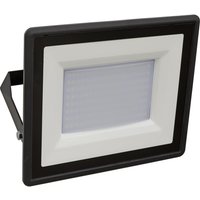

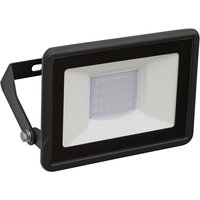
200w LED Flood Light with Photocell Sensor & Samsung Chip - 65000K
simplelighting.co.uk
Lifespan
When it comes to lifespan, LEDs again outperform halogens. An LED bulb can last anywhere from 15,000 to 50,000 hours, whereas Halogen bulbs average around 2,000 to 4,000 hours of use. This extended lifespan means that, although the initial cost of LED bulbs might be higher, their longevity makes them a more economical choice over time.
Consider a scenario where you use your lighting for an average of 5 hours a day. An LED bulb could last you anywhere from 8 to 27 years, while a halogen would only last 1-2 years, leading to more frequent replacements and added costs.
Light Quality
The quality of light produced is another crucial factor to consider. Halogen bulbs are known for their bright and crisp light, which makes them ideal for use in settings where true colour rendition is essential, such as art studios or galleries. They also provide a warm light, which many people prefer for residential settings due to its cozy ambiance.
In contrast, while many users find LED lighting to be equally appealing, some LED lights can have a harsher or cooler tone, though newer models have been developed to mimic the warmth of halogen lighting. As technology advances, the gap in light quality is diminishing, providing LED users with more options in terms of colour temperature and brightness.
Cost Comparison
The initial cost of lighting can be a significant factor when deciding between LED and halogen. Halogen bulbs are typically cheaper upfront compared to LEDs, making them attractive to consumers on a budget.
However, considering the aforementioned factors—energy efficiency and lifespan—the long-term cost of halogens may outweigh their initial lower price. In fact, many consumers might find that the cost savings of LED lighting over time make it the best investment. A simple cost comparison shows that while LEDs might cost slightly more, the energy savings and reduced frequency of replacement can lead to significant savings.
Comparison Table
| Criteria | LED Lighting | Halogen Lighting | Verdict |
|---|---|---|---|
| Energy Efficiency | Uses 75% less energy | Uses 25% more energy than LEDs | LED wins |
| Lifespan | 15,000 - 50,000 hours | 2,000 - 4,000 hours | LED wins |
| Light Quality | Available in various tones | Produces bright, warm light | Halogen wins (for warmth) |
| Initial Cost | Higher upfront cost | Lower upfront cost | Halogen wins |


Expert Opinion
> 💡 Expert Insight: Upon reviewing consumer preferences, it is evident that while halogen bulbs have their merits, particularly in terms of light quality, the overwhelming evidence in energy efficiency, lifespan, and overall cost savings points clearly towards LEDs. According to the International Energy Agency, the rapid adoption of LED technology is forecasted to accelerate, making them the dominant lighting option globally by 2026.
What is the main difference between LED and halogen lights?
The main difference lies in energy efficiency and lifespan. LEDs use significantly less energy and last much longer than halogen bulbs.
Which type of lighting is best for residential use?
Ultimately, it depends on your needs. If efficiency and longevity are your primary concerns, LEDs are recommended. However, for warm light, halogens may be preferable in certain rooms.
Are LED lights worth the investment?
Yes, despite the higher initial cost, LEDs pay off in the long run through energy savings and reduced replacement costs.
Can LED lights be used in any fixture?
Yes, most fixtures are compatible with LED lighting, though it's crucial to check manufacturer specifications for any restrictions.
Glossary
| Term | Definition |
|---|---|
| LED | A light source that converts electricity into light through semiconductor technology. |
| Halogen | A type of incandescent bulb filled with halogen gas to increase efficiency and longevity. |
| Energy Efficiency | A measure of how well a lighting system converts energy into usable light, impacting operating costs. |
Checklist Before Purchase
- [ ] Assess the energy efficiency of the options.
- [ ] Determine the appropriate lifespan based on usage.
- [ ] Compare the light quality to your needs.
- [ ] Factor in the initial cost versus long-term savings.
- [ ] Verify compatibility with fixtures.
📺 Resource Video
For further insights, search for: "LED vs Halogen lighting comparison" on YouTube for detailed visuals and explanations.
In conclusion, the choice between LED and Halogen lighting ultimately depends on your specific requirements. While halogen bulbs provide warmer light quality, LEDs dominate on efficiency, lifespan, and cost savings.
There are plenty of suitable options available in the market today. We have selected several products adapted for your needs; please explore our recommendations below.
📺 Pour aller plus loin : LED vs Halogen lighting comparison sur YouTube
Recommended products
Selected by our experts


Super Slim High Power 1.8w LED Triangle Cabinet-Light - Cool White or Warm White
simplelighting.co.uk

EnerGenie MIHO076. Control type: ButtonsWireless Product colour: ChromeWhite International Protection (IP) code: IP20. Width: 85 mm Depth: 28 mm
Quzo UK